
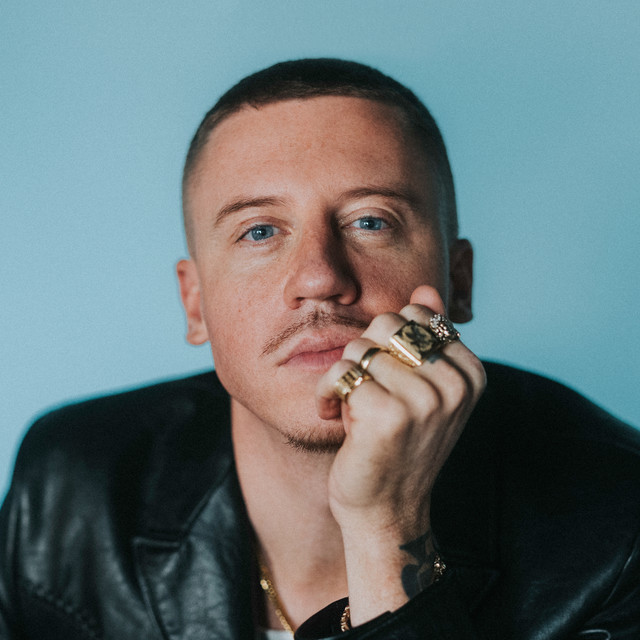
When pop artist Ed Sheeran announced the Loop Tour to promote his new album “Play,” hip-hop artist Macklemore was booked as an opener for 10 shows. Macklemore only ended up playing two, as a pro-Palestine speech he made during his set on Sept. 4 at MetLife Stadium in New Jersey led to his removal from the tour. In the weeks following, both artists released public statements about the situation. Macklemore connects his removal to broader issues of political expression and emphasizes moral responsibility, while Sheeran emphasizes his lack of involvement in the removal decision and explains his choice not to use his professional platform for politics.
Sheeran’s responses are representative of a larger problem: the harm stemming from political inaction with regard to Palestine, and what a United Nations commission has concluded as genocide. If we, as a society, are to fight against injustice in the world, we may look at Sheeran as a lesson on what we must not do.
Before arguing against Sheeran’s statements, further context is necessary. After the Oct. 7, 2023, attacks, Macklemore has made pro-Palestine advocacy central to his music and actions as a public figure. Since 2023, he has repeatedly called for a free Palestine and in 2024, released the pro-Palestine song “Hind’s Hall”, named after a Columbia University student building that was the site of multiple student protests. Thus, it was not surprising that before his performance of “Hind’s Hall,” Macklemore shared these remarks.
“The people all the way in Gaza to the occupied West Bank know that we have not forgotten about them. I say free Palestine. I say free Lebanon. Free Cuba to the Congo to Sudan to Iran. Free all people in America living in fear over this terrorist organization, ICE.”
After the show, multiple NFL team owners whose stadiums would have served as venues for the Loop tour threatened to cancel concerts if Macklemore remained as an opener. According to Wall Street Journal journalist Andrew Beaton, Robert Kraft, chairman and CEO of the Kraft Group, which owns the New England Patriots and Gillette Stadium, told Sheeran that Macklemore would not be permitted to perform. Kraft confirmed the decision in a statement, saying the stadium does not allow events that “provide a platform for hate speech.” Following these threats of mass cancellation, Messina Touring Group — Sheeran’s promoter — removed Macklemore from the tour. On Sept. 14, Macklemore addressed the situation in an Instagram post. In it, he discussed his removal from the tour, Sheeran’s neutrality on the issue and Macklemore’s belief that artists are responsible for using their platform to take a stance against the genocide. On Sept. 15, Sheeran released his own statement on Instagram. In his post, Sheeran expressed empathy for both Israel and Palestine, dissatisfaction with the idea that performers should have their sets pre-approved by venues, and a commitment to continue to do the tour. A few days later, he made a speech at his Philadelphia show, the last public comment that he has made as of press time.
In his speech during the Philadelphia show, he repeated many of the same points in his post, while emphasizing how unequal the “situation” in Palestine is, describing Israel’s response to the Oct. 7 attacks as “catastrophic, unjustifiable, and disproportionate” and claiming that he would continue to learn more about the conflict to make a contribution.
The first issue with Sheeran’s rhetoric of political inaction is his claim that he is apolitical. In his Sept. 15 Instagram post, he stated that he “does not use his professional platform for politics.” This rings hollow as there are multiple examples of him doing just that. In 2022, he played a benefit concert to raise funds for a Ukrainian humanitarian appeal following the escalation of war in the country earlier that year. Additionally, he publicly opposed Brexit and endorsed Labour politician Jeremy Corbyn. Although this may seem pedantic, Sheeran’s attempt to pick and choose what issues are political — or “too political” — and thus inappropriate for him to talk about as a pop star is a tactic for him to excuse his political inaction. Sheeran can claim he does not get involved in politics by drawing the line between “political” and “apolitical” wherever he wants to, avoiding any scrutiny or loss of revenue that could be caused by actually taking a side.
The trouble with his attempt to excuse himself from political action is that Sheeran is unable to recognize that inaction is, in itself, a political action. In the case of the genocide inflicted by Israel, it is one of complicity. By continuing to perform his tour despite Macklemore’s removal, I argue that Sheeran’s continued performances generate revenue for people like Kraft, who has donated to pro-Israel causes. As mentioned previously, before it was canceled due to weather conditions, Sheeran was booked to perform at Gillette Stadium in Massachusetts, owned by Robert Kraft. Kraft is an ardent supporter of Israel, winning the Genesis Prize for his commitment to the country and attempts to delegitimize it. During Kraft’s award ceremony, Israeli Prime Minister Benjamin Netanyahu stated that “Israel does not have a more loyal friend than Robert Kraft.” Therefore, in attempting to portray himself as an apolitical actor who is “not complicit,” in Sheeran’s words, in the suffering caused by Israel’s genocide, Sheeran generates financial support for it through his political inaction.
Outside of financial support, his inaction normalizes the suppression of those who oppose the genocide. One of the world’s biggest pop stars showing a lack of resistance to an artist having his platform removed for his support of Palestine and moving on as if nothing had happened aids in creating a political environment where apathy towards genocide is acceptable. In a world where protesters against Netanyahu’s visit to the United Nations in New York City are detained and students are suspended for pro-Palestine activism, apathy towards suppression is the last thing we need. Sheeran’s inaction contributes to a political landscape where people are fired and arrested for actively opposing a genocide. Although inaction may seem neutral, when one side is facing an active genocide and its supporters are suppressed for their opposition, inaction is complacency that allows further injustice to occur.
Furthermore, Sheeran’s unwillingness to act against the decision of his touring group and the NFL owners reflects an unwillingness to make sacrifices for the sake of the greater good. I will not deny that if Sheeran were to call off the tour in protest, there would undoubtedly be consequences for thousands of people. Fans would have spent money on nothing, event staff would be out of a job and Sheeran would lose out on a massive amount of income. However, I argue that the political impact of this action would have outweighed its immediate negative effect. It would have set a precedent by demonstrating that there are tangible economic consequences venues could face for preventing artists from speaking out politically, stripping them of their revenue and encouraging a massive wave of refunds, which would damage the venue’s profits. Additionally, although the consequence of unemployment for the event staff seems horrible, when we consider who is calling off the tour, the seemingly negative impact is lightened.
Sheeran is a pop star who has made millions of dollars from touring. According to Billboard, his previous tour, the three and a half year long Mathematics Tour, grossed $875 million, with his Divide tour before that grossing $776 million in two and a half years. Although data on the profits of the Loop tour has not been released, Macklemore, in an Instagram statement released a few days after his removal, announced that he donated the $1 million in his net earnings from the tour to various organizations supporting Palestinians. Assuming that, as the tour’s headliner, Sheeran earns more than Macklemore, he has already earned millions from the Loop tour, in addition to his earnings from previous tours and an estimated £300 million as of 2023. Thus, I argue it is not unreasonable to claim that Sheeran could sacrifice part of his millions to compensate those left out of work by a tour cancellation, in addition to providing them with financial support during the period they are out of work.
The harm of Sheeran’s political meandering is apparent when considering the reach of his global platform. However, political inaction is still incredibly harmful among individuals with far smaller platforms. By refusing to tangibly fight against the genocide that Israel is committing, the individual citizen becomes complicit in it. This is especially true for those of us living in the United States, whose government sends Israel billions of dollars in military aid, funding the genocide through its citizens’ tax dollars. We can learn from Sheeran’s inaction and fight back, even if it means making some sacrifices. As the successful campaign by Students for Justice in Palestine of Palatine Hill to get Lewis & Clark to divest from weapons manufacturing demonstrates, resistance is more than possible and achievable against the genocide when done on a collective level.

Author

About the Author

