

Each spring, student recipients for the Nielson Social Change Innovation Grant are selected and awarded $500 to $5000 each to create innovative community change initiatives within their communities. Generally there are two winning recipients, though depending on how much money applicants request for their projects, there can be more than two recipients. Last year, Nichole Champion ’25 and Índigo Araya Rodriguez ’24 were selected, completing their projects in Portland and Costa Rica, respectively.
Rodriguez’s project, “Trans and Non-binary Anti-discrimination Training Project: Facilitadores Trans Sensibilizando Servicios Públicos en Costa Rica,” partnered with activist group No-Binarie Costa Rica to combat discrimination against transgender and nonbinary individuals in Costa Rica by hosting a facilitation training camp where 15 transgender participants could develop skills in conflict resolution, public speaking and transgender advocacy. These facilitators then were deployed across hospitals, governments and universities in Costa Rica to conduct their own educational workshops — thus furthering queer rights through grassroots activism.
Champion spoke more to her Nielson Social Change Innovation Grant project, “Holistic Wellness Initiative for Inquiry for Justice,” in an interview with The Mossy Log.
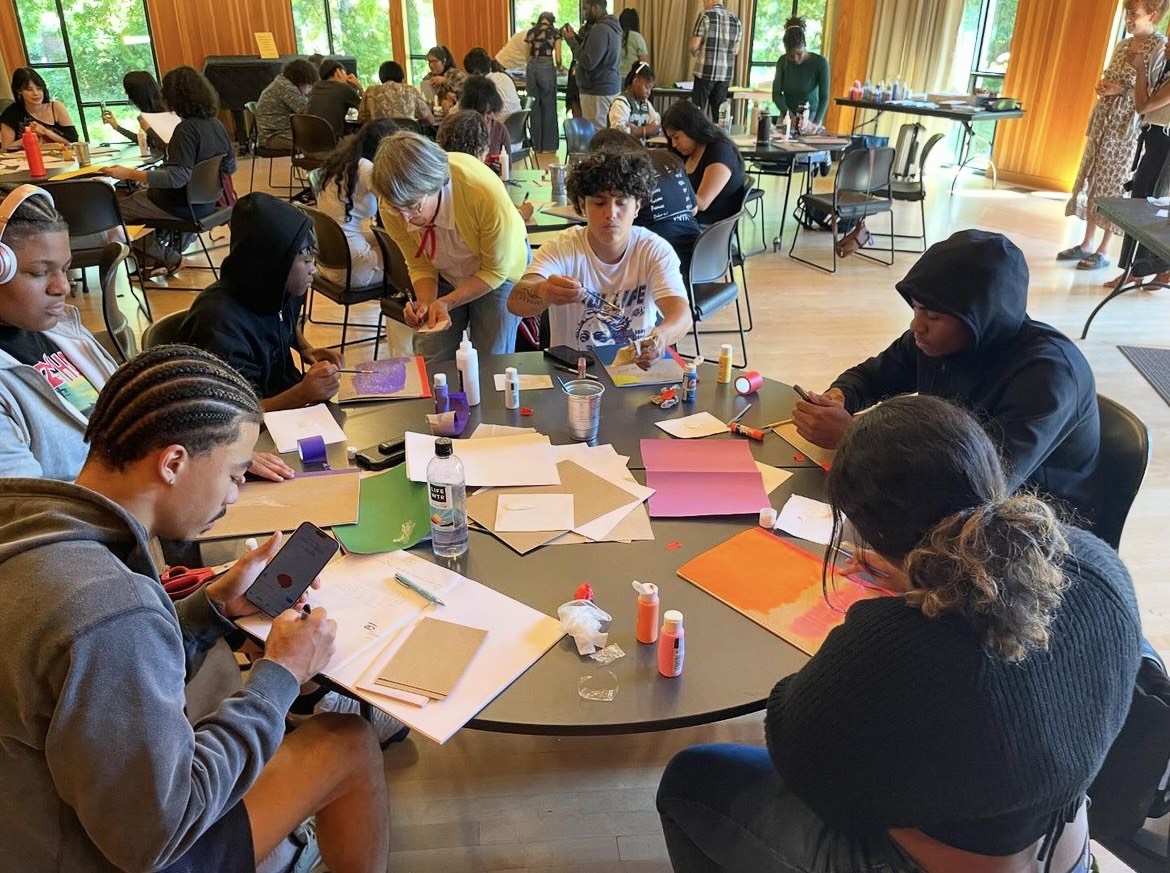
Champion, a senior psychology major, shared how she was able to use the Nielson Grant to further her existing work with the Inquiry for Justice program through Portland State University (PSU) — a summer camp for rising high school seniors and rising college freshmen who are first-generation college students.
“One day, I was going to class, and I saw that the Center of Social Change had a table and they were advertising the Nielson Grant, and I was like ‘Oh, this is such a cool opportunity, I could totally use that to my advantage,’” Champion said. “I thought that the grant would be a good resource to further my impact with the project I was already doing.”
After attending a grant workshop and working with the grant committee, Champion submitted her proposal and won the full grant, which totaled $5,000.
“I ended up getting it and I was really stoked about it,” she said.
Champion became involved with Inquiry for Justice through a professor who taught her in high school, and first joined the program as a wellness coordinator, teaching yoga classes, facilitating mindfulness activities and encouraging students to be present with themselves in creative ways.
“She kept tabs on me after I graduated,” Champion said. “In 2020, I was teaching yoga and I was focusing on health and wellness during the rise of the protests and Black Lives Matter, where I felt like where I wanted to play my part in the protests, or resistance, was encouraging people to focus on their health and wellness, because I feel like that’s a form of liberation. It’s important for us to take care of ourselves while pursuing the things we want to pursue, but also if we’re trying to combat systemic oppression.”
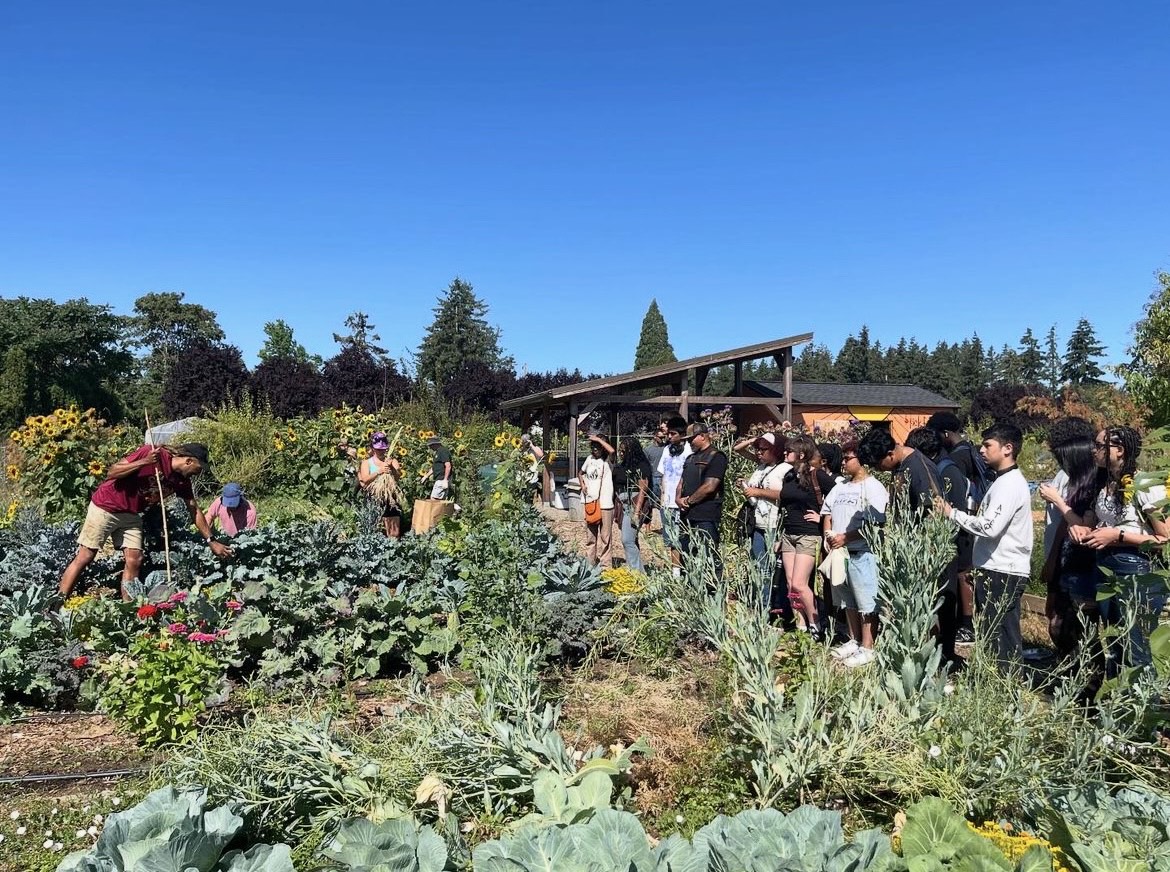
Champion used the grant money in several ways. She paid for a yoga instructor to teach classes at the summer camp and for a videographer to capture footage of the program throughout the two weeks. She bought art supplies, personalized T-shirts for the students and most notably, coordinated a field trip to a local Black-owned farm for students to learn more about how to combat food injustice in communities of color — which she identified as a crucial element of holistic wellness for youth.
“It was a great opportunity to enlighten students about how we are targeted in the food industry and ways we can combat that. So I coordinated a field trip for students to go to Black Futures Farm, which is a farm that’s ran by people of color and it encourages people to connect back with the land,” said Champion. “The students was able to tour the farm, and a lot of the kids there, it was their first time ever being on a farm … seeing what a fig tree looked like or picking fruit from the earth, which was really beautiful.”
Champion was able to address food insecurity in other areas of the summer camp beyond the field trip, too.
“I was able to have some organizations come in and share food markets that give fresh produce to families and it’s free and students were able to connect with them and see some of the work they do,” Champion said. “Especially for students that live in certain parts of Oregon that have food deserts, or don’t have access to higher quality food because it’s really expensive.”
Going forward, Champion hopes to integrate teaching wellness into her broader social justice work.
“Those kids already know they’re marginalized, they already know that they’re being treated differently and that they’re being discriminated against on a systemic level,” Champion said. “I just felt called to not continue to teach students about social justice because they already know, you know? I wanted to give them tools that they can use to navigate through the obstacles … It’s trying to teach students how to cope with stress, how to cope with when things don’t go your way, or even just the stressors that come with being a young adult transitioning from high school to college. That’s my main focus when I serve students, is giving them the tools they need to take care of themselves, because that’s something I wish someone did for me.”
Champion expressed interest in the work of future Nielson Social Change Innovation Grant recipients, and thanked the Nielson family for funding this opportunity.
“It’s amazing work that is able to be done because of this grant and I’m really appreciative to the Nielson family for creating this opportunity for students,” Champion said. “I can say that doing this project was one of the things that helped me get accepted into grad school because I feel like the grant gave me the freedom to really express or facilitate a vision.”
Post-grad, Champion will pursue a master’s with the Professional Mental Health Counseling Program at the Lewis & Clark Graduate School. She also was recently awarded the 2025 Projects for Peace Grant.
“I actually just won the Projects for Peace Grant, so I’m working on putting together that project for the upcoming summer, getting ready to go to grad school in the fall, so I have a lot of amazing things cooking up over here,” Champion said.
This year, the applications for the Nielson Social Change Innovation Grant closed on March 31, and the recipients were announced on April 10 through the Center for Social Change. At the time of writing this article, the recipients had not yet been announced.
About the Author


