
Courtesy of Slate Magazine
Most Sunday mornings of my childhood, I would sit in my Hello Kitty pajamas with my bowl of cereal and watch “Saturday Night Live” with my family. Because its airtime was past our 8:30 p.m. bedtime, SNL became a Sunday morning tradition. My family had many shows that we watched all together — “Survivor,” “The Amazing Race,” “The Voice” — but eventually each show would end, we would get bored and move on or it would become too gimmicky and repetitive. The one show that remains a part of our routine — even after both my sister and I have moved out — is SNL.
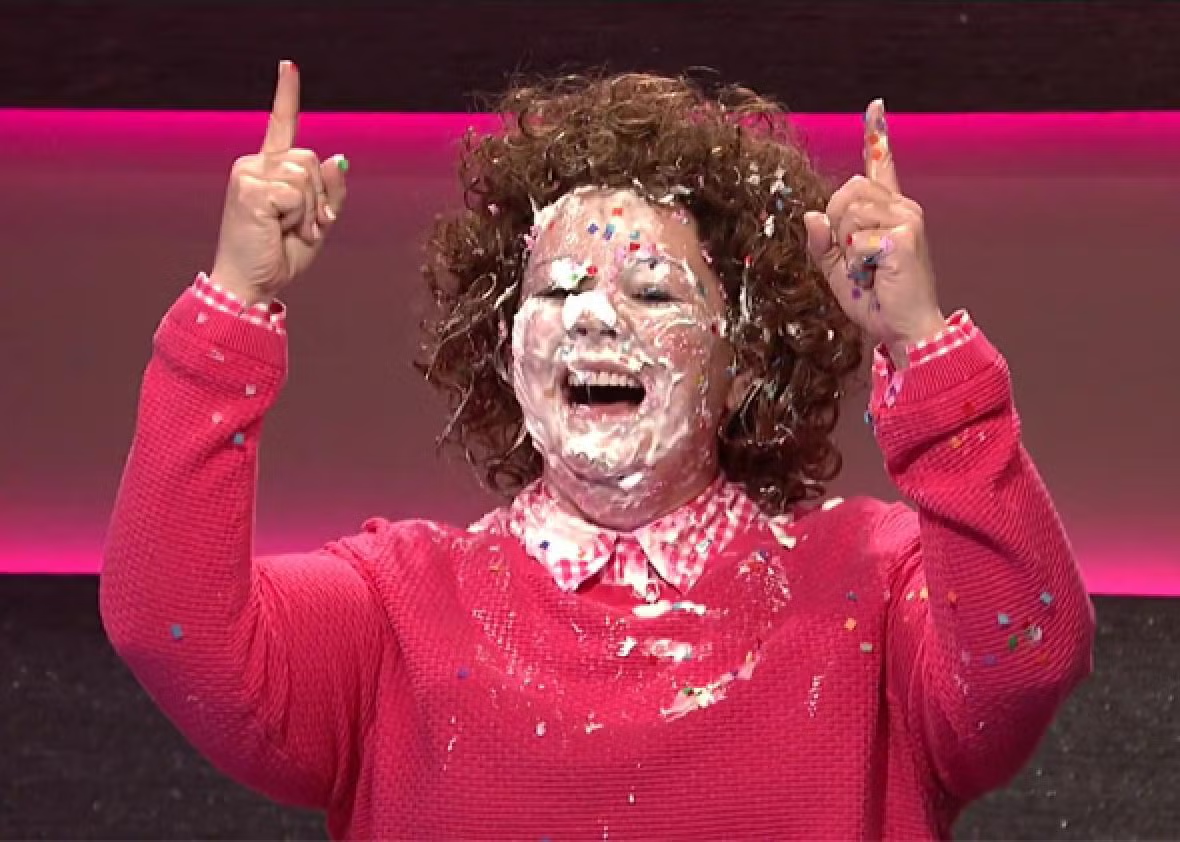
When I was a kid, most of the jokes went over my head. However, I still enjoyed the ridiculousness of Bobby Moynihan’s “Drunk Uncle” character, laughed at Melissa McCarthy having pie smashed in her face on a game show and, of course, appreciated timeless classics like “More Cowbell” and “David S. Pumpkins.”
As I got older, especially when I was in middle school during the 2016 election, I became more attuned to the witty political satire that makes up a good portion of the show. I had been raised on ideas of world peace and a green era in the Obama “millennial optimism” years, and watching them crumble under the Trump administration was confusing and disheartening. SNL became a respite.
It acknowledged the downturned state of the world, but it framed it in a funny, satirical manner. SNL made fun of Republicans’ turn further to the right and made fun of Democrats’ inaction. Growing to understand the political landscape of the world came hand in hand with gaining a deep appreciation for the role that political satire holds in our country.
SNL’s political commentary gives us a moment to laugh in the middle of an era of political turmoil and division, while also calling attention to politicians’ actions. The show’s political satire is a way to check political power, expose ridiculous or hypocritical claims and be a voice of the American people.
Not only creating, but also engaging, in political satire is an exercise of free speech. James Austin Johnson is able to don a red tie and prosthetics each week to call attention not only to Trump’s negative actions, but also to the ridiculousness of his presence. Maya Rudolph is able to wear a brightly colored pantsuit and talk to former Vice President Kamala Harris in the mirror.
Tuning in each Sunday morning to a new SNL episode is not only entertaining, it is also one way for Americans to exercise their ability to freely critique political leaders. Engaging in political satire is also a way to encourage political participation. Watching SNL alone
is not enough to be a fully informed voter, but engaging in the political landscape through its satire can be a foot in the door.
As someone who grew up watching SNL’s political satire, I do feel like I have a nuanced and informed view of the political landscape of the United States. SNL made me laugh when I was first learning the ins and outs of a presidential election in 2016. SNL made me familiar with political issues and invested in aspects of politics that I might not have been interested in otherwise. Most importantly, SNL gave me a deep appreciation for the role that political satire plays in freedom of expression and freedom of speech. Today, as a voter, I still tune into SNL. I still see SNL’s political satire as an important part of engaging in the American culture of publicly criticizing politicians. I still see SNL as a piece of my understanding of the political world.
When I came to college, I was surprised by how many of my peers did not understand my references to SNL sketches, old and new. I realized that my Sunday morning political satire routine was not universal, and I think that is disappointing. Yes, not all SNL sketches are winners. And yes, they have had such moments as Elon Musk dressed as Wario, Morgan Wallen leaving early to get to “God’s country,” and Shane Gillis calling
women “whores” on air. But I believe that to fully understand the political world we live in, we have to face the ugly stuff too.
Not only does SNL satirize political figures, but it is also a good way to escape the online, algorithmic bubbles and hear the real things aired on national television. I think Shane Gillis’s comments were horrendously misogynistic, but these comments airing on SNL make us as viewers aware of what other Americans feel comfortable saying on air, and it makes us think about how we got here. It brings light in darker situations. The beauty of SNL is that Inde Navarrette’s monologue in the next episode can mock Gillis’s joke, because SNL gives its hosts and cast a wide latitude, and the show takes the heat when it goes too far.
SNL’s ability to be a vessel of free speech through political satire is what makes it timeless. SNL is a cornerstone of American political culture, and I think more young people need to tune in. With the recent addition of cast members such as Grace Reiter, Jeremy Culhane and Kam Patterson, the show is adapting to a new Gen Z audience. So next time you want a laugh, consider putting on some Sunday morning SNL — you might just gain a deeper understanding and connection to the political atmosphere you are a part of in the process.
About the Author


